
National SARAS Mela 2026 to Showcase 1,500+ Women Entrepreneurs in Vijayawada, Expanding Opportunities for Rural Businesses
National SARAS Mela 2026 to Showcase 1,500+ Women Entrepreneurs in Vijayawada, Expanding Opportunities for Rural Businesses
The Government of India’s flagship rural livelihoods initiative will connect women-led self-help groups with customers, industry experts and wider markets through a national exhibition running from October 13 to 31.
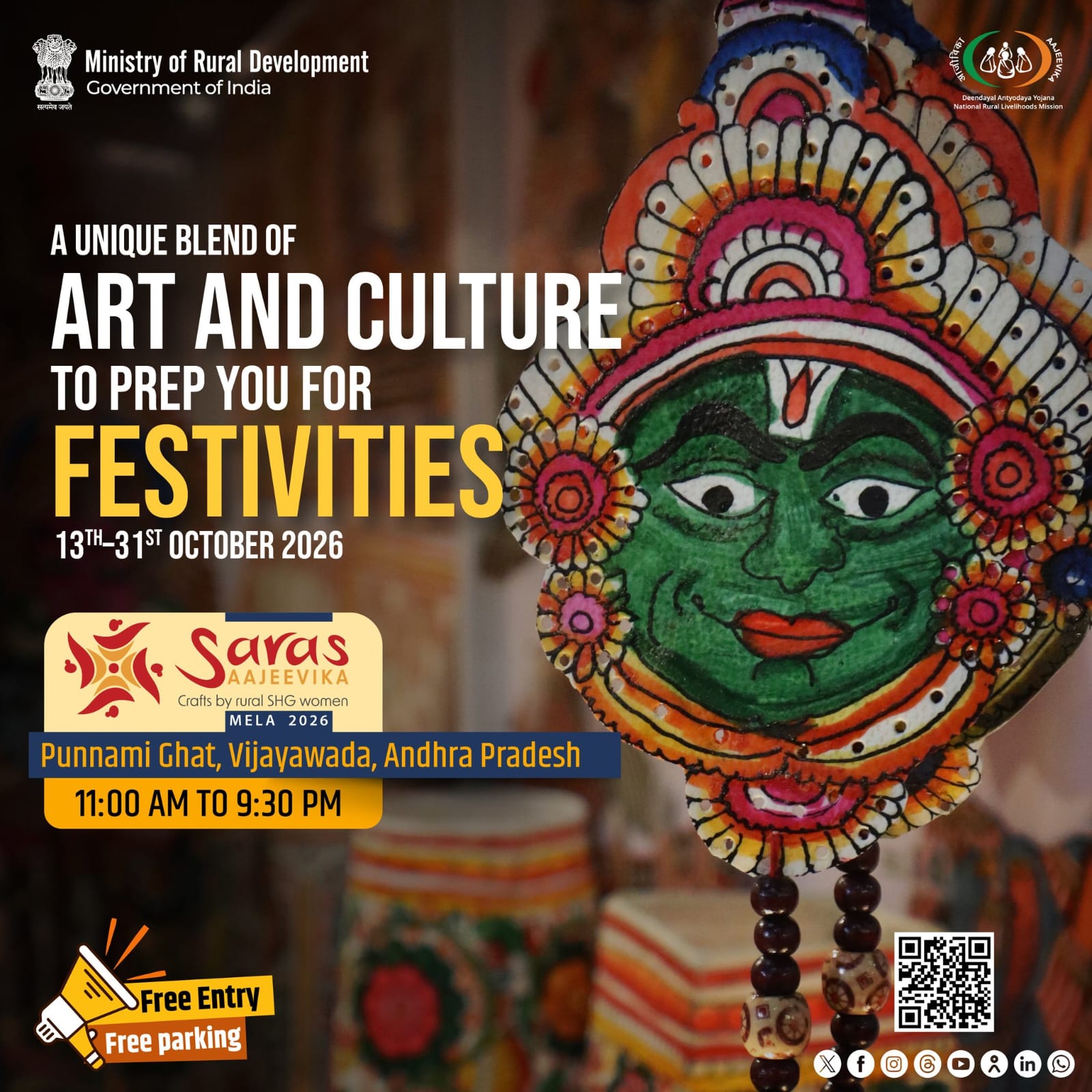
India’s rural women entrepreneurs are set to receive a major platform to showcase their products and expand their businesses as the National SARAS Mela 2026 opens in Vijayawada. Organised by the Ministry of Rural Development in collaboration with the Government of Andhra Pradesh and the Society for Elimination of Rural Poverty (SERP), the event will bring together more than 1,500 women from self-help groups (SHGs) across over 30 states and Union Territories.
Taking place at Punnami Ghat from October 13 to 31, the mela is being held nationally in Vijayawada for the first time outside the Delhi-NCR region. The event is designed to connect rural producers directly with consumers, improve market access and create opportunities for women to turn traditional skills into sustainable enterprises.
According to the Ministry of Rural Development’s official announcement, President Droupadi Murmu is scheduled to inaugurate the event on October 15 at 11:30 a.m.
Creating New Market Opportunities for Women Entrepreneurs
The National SARAS Mela serves as a marketplace for women-led enterprises operating through self-help groups. Participants will showcase a broad range of products, including handloom textiles, handicrafts, traditional artwork, home décor, regional food products and other locally made goods.
The exhibition will feature products representing India’s diverse craft traditions, including Phulkari from Punjab, Pashmina from Jammu and Kashmir, Ikat and Telia textiles from Telangana, and Paunchei from Mizoram. Visitors will also be able to explore Meenakari work, Dokra crafts, brassware, woodcraft and traditional paintings.
By enabling women entrepreneurs to sell directly to customers, the mela can help participating groups improve product visibility, receive customer feedback and establish new commercial relationships. Direct selling also creates opportunities to understand market demand and identify products that could be developed for larger markets.
Connecting Traditional Skills With Modern Business Practices
Beyond product exhibitions, the National SARAS Mela 2026 will provide opportunities for participating women to learn about the practical requirements of running and expanding a business.
A dedicated Knowledge Pavilion will facilitate interactions with industry representatives, corporates and experts on branding, packaging, marketing, business development and market expansion. These capabilities are increasingly important for small enterprises seeking to move beyond local markets and build recognisable brands.
The Convergence Pavilion will connect participants with relevant government departments, ministries and supporting institutions. Such interactions can help women entrepreneurs understand available programmes, institutional assistance and potential opportunities for collaboration.
The mela will also feature live demonstrations of traditional crafts and handloom production, allowing visitors to see how products are made and learn about the skills behind them.
Lakhpati Didi Initiative and Women’s Financial Independence
A key attraction will be the Lakhpati Didi Pavilion, which will highlight the journeys of rural women who are building livelihoods through skills, collective enterprise and improved access to markets.
The event aligns with the Deendayal Antyodaya Yojana–National Rural Livelihoods Mission (DAY-NRLM), which supports rural poor households through self-help groups, livelihood development and financial inclusion.
The government’s broader vision includes creating six crore Lakhpati Didis by 2029. The initiative seeks to help women associated with self-help groups achieve sustainable annual household incomes of at least ₹1 lakh through livelihood activities and enterprise development.
For women in rural communities, greater access to income-generating opportunities can contribute to financial independence, increased participation in household decisions and stronger roles in local economic development.
Combining Physical Exhibitions With Digital Commerce
The National SARAS Mela will operate alongside wider efforts to expand the reach of rural enterprises through the SARAS Aajeevika Gallery and the eSARAS digital marketplace.
The eSARAS platform enables women-led self-help groups and other eligible rural producer collectives to showcase products online and reach customers beyond their immediate geographical areas. Digital commerce can complement physical exhibitions by creating opportunities for sales outside the duration of a particular event.
The Ministry of Rural Development has also highlighted the importance of improving product catalogues, branding, packaging, inventory management and logistics to help rural enterprises participate more effectively in online markets.
Combining physical exhibitions with digital selling can give women entrepreneurs additional routes to reach customers, develop their brands and build more consistent business opportunities.
Supporting Rural Livelihoods and Local Economies
The National SARAS Mela 2026 will also feature a food court with 50 stalls offering regional cuisines, along with cultural programmes and live craft demonstrations. A 16-foot installation titled “SHAKTI – The Spirit of Lakhpati Didi” will symbolise the contribution of women to rural livelihoods and traditional craftsmanship.
The event is supported by government partners, including the National Bank for Agriculture and Rural Development (NABARD) and the National Institute of Rural Development and Panchayati Raj (NIRDPR).
For participating entrepreneurs, the potential benefits extend beyond sales during the exhibition. Connections with buyers, businesses and support institutions may help women identify new markets and strengthen their operations over time. However, long-term outcomes will depend on continued access to finance, production capacity, reliable supply chains and sustained customer demand.
A Step Towards Inclusive Entrepreneurship
The National SARAS Mela 2026 highlights the role of women-led self-help groups in India’s rural economy. By combining product showcases, direct sales, business-development guidance and digital market access, the initiative seeks to create more pathways for rural women to participate in entrepreneurship.
As the event brings together women from more than 30 states and Union Territories, it will provide a platform to showcase India’s regional craftsmanship while highlighting the economic potential of women-led enterprises.
For India’s women empowerment and startup ecosystem, the mela illustrates how access to customers, business knowledge and market connections can help rural women transform traditional skills into stronger and more sustainable livelihoods.
Comments are closed, but trackbacks and pingbacks are open.